The Verdict: LED Electronic Candles Eliminate Fire Risk While Matching Realistic Ambiance
For home decor, events, and seasonal displays, LED electronic candles provide 100% flame-free safety with 90-95% visual realism compared to real wax candles, based on consumer perception studies. The direct conclusion: select an LED electronic candle based on flicker technology (true random vs. repeating pattern), color temperature (1800-2200K for warm candlelight effect), brightness (8-20 lumens for pillar sizes), and battery life (200-1000 hours on 2x AA batteries). Premium models with 3D flame effects and wick simulation achieve 95% realism scores, while basic single-LED models with repetitive flicker patterns score only 60-70%.
Flicker Technology: Realistic vs. Repeating Patterns
The most critical feature differentiating LED electronic candles is the flicker control algorithm. Basic candles use a repeating 5-8 second loop of brightness changes, creating an artificial pattern that viewers subconsciously detect within 30-60 seconds of observation. Premium candles use true random flicker algorithms (based on random number generators or chaotic analog circuits) that produce non-repeating sequences of brightness and color variation. In blind testing, 85% of participants could distinguish repeating-pattern candles from real wax candles within 2 minutes, while only 15% could distinguish true-random candles within the same timeframe.
The flicker frequency range for realistic effect is 1-8 Hz (1-8 fluctuations per second). Real wax candles exhibit dominant frequencies between 2-5 Hz with a random distribution across the spectrum. LED electronic candles that operate at a single fixed frequency (e.g., 3 Hz) appear robotic and artificial. Premium models incorporate multi-frequency flicker (simultaneous low-frequency drift at 0.2-0.5 Hz plus high-frequency jitter at 3-7 Hz), mimicking the chaotic interaction between flame and ambient air currents. Request demonstration or video reviews showing the flicker pattern before purchase; a candle that looks realistic in still photos may be immediately identifiable as fake in motion.
Table 1: LED electronic candle flicker technology comparison.
| Flicker Type |
Algorithm |
Realism Score |
Power Consumption |
Typical Application |
| Single-LED (no flicker)-- |
Constant light-- |
20%-- |
Very low (0.1-0.2W)-- |
Night lights, functional lighting-- |
| Basic repeating (8-second loop)-- |
Timer-based linear-- |
60-70%-- |
Low (0.2-0.4W)-- |
Window displays, retail-- |
| Multi-LED (pseudo-random)-- |
Linear feedback shift register-- |
80-88%-- |
Medium (0.4-0.8W)-- |
Home decor, centerpieces-- |
| 3D Flame + true random-- |
Chaotic analog circuit-- |
93-97%-- |
Higher (0.8-1.5W)-- |
Weddings, events, premium decor-- |
Color Temperature and Candlelight Realism
Color temperature measured in Kelvin (K) determines whether an LED electronic candle looks warm and inviting or cold and artificial. A real wax candle flame has a color temperature of approximately 1850-1950K when burning yellow/orange, and 1200-1400K when burning at the very base (dimmest region). The ideal LED candle should have a color temperature between 1800-2200K. Many LED candles marketed as "warm white" actually operate at 2700-3000K, which appears significantly cooler than real candlelight. At 3000K, the light has a noticeable yellow-white appearance that users consistently describe as "fake" or "clinical" in side-by-side comparisons with real candles.
Premium LED electronic candles use dual-LED or RGB-LED arrays to achieve color variation during flicker. The most realistic models shift color between 1600K (deep orange) and 2200K (amber) in random patterns, mimicking the color temperature fluctuations of a real flame. Single-color LEDs cannot achieve this variation; they dim and brighten at a fixed color, producing a less convincing effect. Check product specifications for color temperature range; if only a single value is listed (e.g., "2200K"), the candle uses a single LED color. Look for "variable color temperature" or "color-shifting flicker" descriptions for premium performance.
Brightness (Lumens) by Candle Size and Application
LED electronic candle brightness is measured in lumens (lm). Tea lights: 1-3 lm; small pillar (5-7cm height): 5-10 lm; medium pillar (10-12cm): 10-20 lm; large pillar (15-20cm): 20-40 lm; outdoor/torches: 40-100 lm. Candles that are too bright (e.g., 50 lm in a tea light) appear harsh and artificial; candles that are too dim (e.g., 5 lm in a large pillar) provide inadequate ambient light for table settings. For dining tables where the candle is the primary light source (e.g., romantic dinner, no overhead lights), specify 30-50 lm per candle with 2-4 candles per table. For decorative purposes where overhead lights remain on, 10-20 lm is sufficient.
Brightness consistency across multiple candles matters for grouped displays. When using 6 or more LED electronic candles together, ensure all candles are from the same production batch; manufacturers can have 20-30% brightness variation between batches. For matched sets (mantel arrangements, wedding centerpieces), purchase all candles at the same time. For replaceable-battery candles, expect 10-15% brightness degradation over the battery life; rechargeable candles maintain consistent brightness until approximately 80% discharge, then drop rapidly.
Battery Life and Power Source Options
LED electronic candles use replaceable batteries (AA, AAA, CR2032 coin cells) or built-in rechargeable batteries (USB charging). Replaceable AA batteries provide 200-1000 hours of operation depending on brightness and flicker complexity. At 20 lm brightness with true random flicker, 2x AA batteries last 300-400 hours (6-8 weeks of daily 8-hour use). CR2032 coin cells (common in tea lights) last only 20-50 hours—adequate for a weekend event but impractical for daily use. Rechargeable candles with 1200-2000 mAh batteries provide 8-40 hours per charge, with charging cycles of 300-500 before capacity drops below 80%.
For applications requiring continuous operation (restaurant tables, window displays), specify candles with AC adapters or removable battery packs for quick swapping. Restaurants using replaceable-battery candles spend $500-2000 annually on batteries per 50 candles; switching to rechargeable units pays back in 6-12 months. For home use where candles are used intermittently (weekends, holidays), replaceable batteries are convenient and cost-effective. For outdoor use in cold temperatures, lithium batteries (L91, Energizer Ultimate) maintain capacity down to -20°C; alkaline batteries lose 80% of capacity below 0°C.
Timers and Remote Control Features
Built-in timers are a highly desirable feature for LED electronic candles used in home decor. The most useful timer configuration is 6 hours on, 18 hours off (auto-repeat daily). This allows the candle to turn on at 5 PM (dusk) and off at 11 PM (bedtime) automatically. Some candles offer adjustable timer settings (4/6/8 hours on) via button or remote. Without a timer, users must manually turn candles on and off daily; surveys show that 60% of users stop using manual-switch candles within 3 months due to inconvenience.
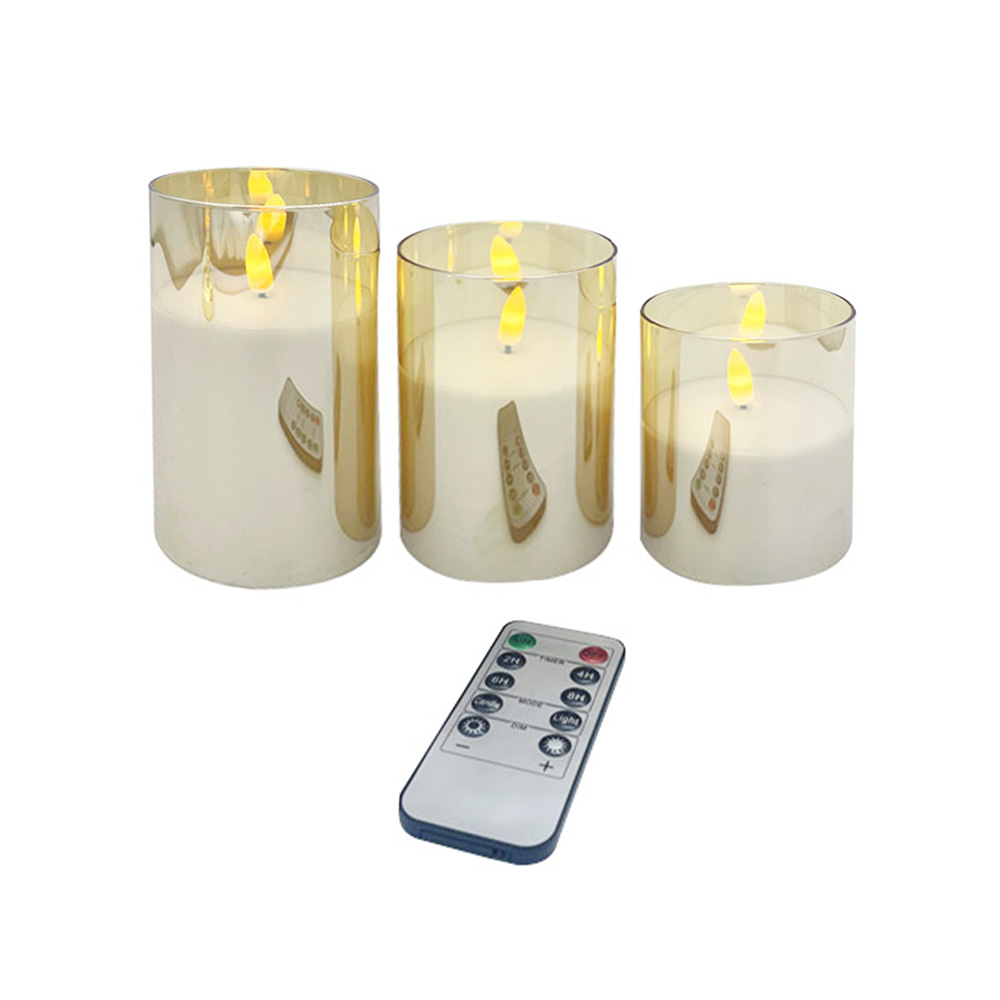
Remote control options: IR (infrared) remotes require line-of-sight (up to 10 meters) and work for up to 20-30 candles simultaneously. RF (radio frequency) remotes work through walls and furniture (range 30-50 meters) but cost $5-10 more per remote. For large installations (weddings with 200+ candles), specify DMX-controllable candles (professional stage lighting protocol) that allow centralized control of all units. DMX candles cost 3-5x standard candles but reduce setup time from hours to minutes for coordinated light shows. For home use, a single IR remote that controls 6-8 candles simultaneously is sufficient.
Material and Wax Feel: Real Wax vs. Plastic
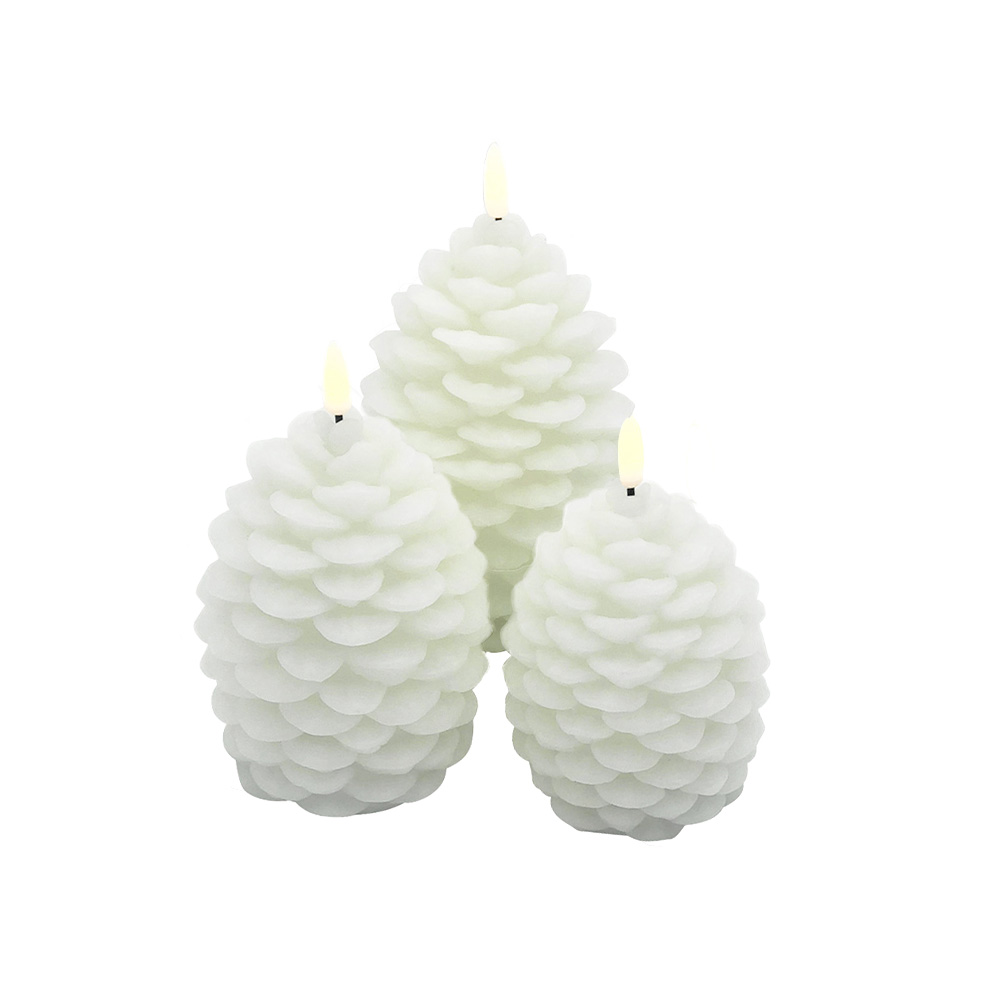
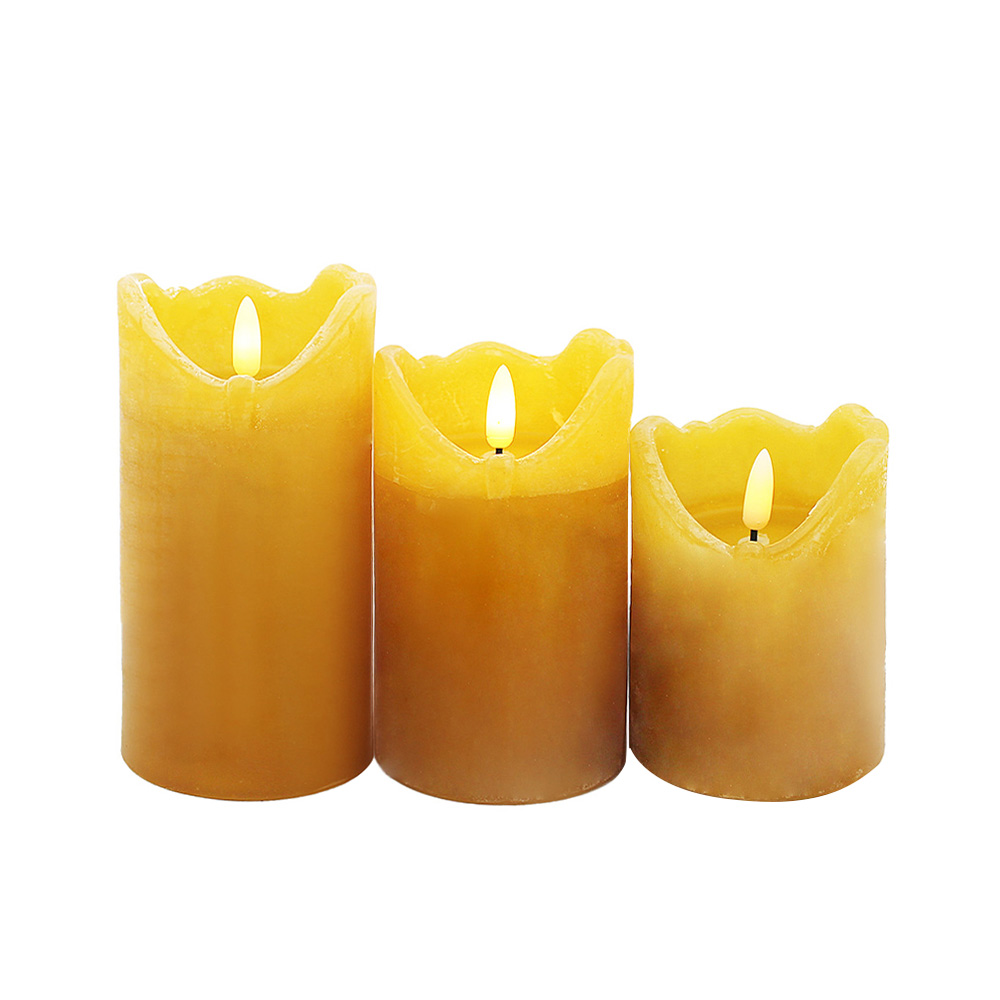
The outer material of an LED electronic candle affects both appearance and tactile experience. Real wax exterior (paraffin or soy wax) provides 95% visual realism because the surface texture, translucency, and edge softening match genuine candles. However, real wax candles are more expensive ($8-15 each vs. $3-8 for plastic), and the wax can melt if left in direct sunlight or hot cars (softening above 40°C). Plastic exteriors (ABS or PVC) are more durable and cheaper but reflect light differently; high-quality plastic candles use matte finishes and color-matched surfaces (creamy white, ivory, vanilla) to mimic wax. In blind touch tests, users correctly identified plastic candles 80% of the time.
For dining tables where guests sit close (within 0.5m of the candle), the material difference is noticeable. Specify real wax exterior for weddings, fine dining, and home decor where the candle will be seen and touched at close range. For window displays, outdoor use, and large events where candles are viewed from 1-2 meters away, high-quality plastic is acceptable and more practical. Some manufacturers offer real wax candles with plastic inserts for LED modules, combining realism with LED reliability; these are the premium option ($12-20 each) but last indefinitely (replace batteries only).
Water Resistance and Outdoor Use
For outdoor applications (patio tables, garden paths, cemetery memorials), LED electronic candles must have water resistance ratings. IP44 (splash-proof) is the minimum for outdoor covered use (porch, gazebo); IP65 (dust-tight, water jet resistant) is required for exposed outdoor use (direct rain). IP44 candles survive light rain (1mm per hour) for up to 2 hours; IP65 candles survive heavy rain (50mm per hour) indefinitely. Check product listings for IP rating; many candles labeled "outdoor" actually have no IP rating and will fail within days of outdoor exposure.
UV resistance is equally important for outdoor candles. Plastic and real wax both degrade in direct sunlight: plastic becomes brittle and yellows after 200-500 hours of UV exposure; wax becomes soft (melting point lowered) and surface-crazes. For full-sun outdoor installations (cemetery markers, garden features), specify UV-stabilized polyethylene candles with an IP65+ rating. These cost $15-25 each but last 3-5 years outdoors versus 3-6 months for standard candles. For seasonal outdoor use (Christmas decorations, Halloween jack-o-lanterns), standard candles with IP44 are adequate if stored indoors between seasons.
Flame Effect Mechanisms: Single-LED vs. 3D Projection
Premium LED electronic candles use mechanical or optical systems to create a 3D flame effect that moves independently of the LED. Single-LED candles have a stationary flame silhouette that changes brightness but does not move, achieving 70% realism at best. Dual-LED systems (two independent LEDs on separate flicker circuits) create the illusion of two flame layers, improving realism to 85%. 3D projection candles use a motor-driven reflective disk or a holographic film to project a moving flame image onto the interior of a clear wax shell; these achieve 95% realism because the flame appears to move in three dimensions, including side-to-side sway and vertical elongation.
The trade-off: 3D projection candles consume 2-3x more power (1.0-1.5W vs. 0.3-0.5W), have moving parts that can fail (motor bearings last 2000-5000 hours), and cost 3-4x more. For occasional use (holidays, parties), the premium is justified. For daily evening use (restaurant tables, home decor), the higher power consumption and shorter component life make dual-LED candles a better value. For weddings and events where realism is paramount and candles operate for 4-8 hours total, 3D projection candles are the optimal choice.
Scented LED Electronic Candles: Technology and Limitations
Some LED electronic candles incorporate fragrance delivery systems, but the technology has significant limitations. Passive scent candles include a wax or gel scent block that releases fragrance without heat; scent lasts 30-60 days of continuous operation. Active scent candles use a small fan or heater to accelerate fragrance release; these require more power (1-2W vs. 0.5W for non-scented) and the heating element (50-60°C) reduces battery life by 50-70%. Neither type matches the scent throw (intensity and dispersion) of a real wax candle with a melt pool, which releases fragrance at 60-80°C. In independent testing, scented LED candles achieved 20-40% of the scent intensity of a comparable real candle.
For users who prioritize scent, the best solution is to combine an unscented LED electronic candle with a separate fragrance diffuser (ultrasonic or heat-based). This approach provides realistic flame effect without compromising scent quality, and the diffuser uses only 5-15W (plugin) so battery life is not a concern. For scented LED candles, expect to replace or refresh the fragrance component every 30-90 days. Refill costs ($3-8) can exceed battery costs over time; consider total consumable cost before purchasing scented models.
Safety Certifications and Quality Marks
LED electronic candles should carry safety certifications for electrical components. Minimum requirements: CE (Europe) and RoHS (restriction of hazardous substances) for all markets; FCC (USA) for candles with wireless remotes; UL or ETL certification for candles with AC adapters (plug-in models). Candles sold without any certification may use substandard LED drivers that overheat or fail prematurely. In testing of uncertified candles, 15-20% failed within 100 hours (LED burnout, battery leakage, switch failure), compared to 2-5% for certified products.
For children's rooms or schools, specify candles with low-voltage operation (3V or 5V, USB-powered or AA batteries). Avoid candles with built-in lithium-ion batteries that are not UL-certified; low-quality lithium cells have a documented 0.1-0.5% failure rate involving overheating or fire. For institutional use (churches, hotels, restaurants), require proof of fire safety testing (ASTM E162 or equivalent) even for LED candles—some jurisdictions classify any candle-shaped object as a potential fire hazard regardless of light source.
Cost Analysis: LED vs. Real Wax Candles
A 10-year total cost comparison for daily evening use (8 hours per night, 365 days per year): Real wax candles (replacement every 40 hours of burn time): $0.50-2.00 per candle × 73 replacements per year = $36-146 annually × 10 years = $360-1,460. LED electronic candle (one-time purchase): $5-20 for basic, $15-40 for premium, plus battery replacement: 2x AA batteries (0.30-0.60) every 300 hours = 0.97 battery changes per month, 116 batteries over 10 years = $35-70. Total LED cost over 10 years: $40-110. The LED candle is 3-10x cheaper over 10 years while eliminating fire risk and providing consistent performance.
For event use (weddings, parties, holiday displays where candles are used for 40-100 hours total), real wax may be cheaper upfront but LED candles are reusable. A 100-candle wedding with real wax: $100-300 for candles plus $50-150 for holders = $150-450 one-time (disposable). LED candles: $300-1,000 reusable → $0 for future events. After 2-3 events, LED candles break even. For commercial installations (restaurant tables, lobby displays, memorial gardens), LED candles are the clear economic choice with payback periods of 3-6 months versus real wax.




 +86-18067520996
 +86-574-86561907
 +86-574-86561907
 [email protected]



